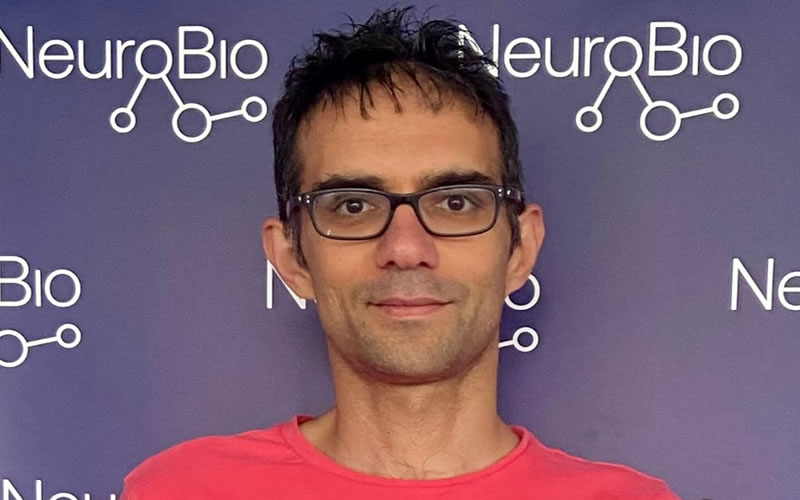
Sibah Hasan is a Senior Neuroscientist at Neuro-Bio since September 2020.
Sibah graduated with a PhD in Life Science from the University of Lausanne, where he validated a new wake-promoting compound (FDA & EMA approved) using a pharmacogenomics approach. He has over 10 years of postdoctoral experience in Neuroscience research (Surrey and Oxford Universities) ranging from biomarker development (for Sleep and Circadian rhythms) to studying the effects of light in brain and behaviour. After finishing his postdoctoral research at the Department of Pharmacology (University of Oxford), working on septo-hippocampal oscillations, he joined Neuro-Bio as Senior Neuroscientist.
Sibah is now working on both biomarkers and therapeutic approaches to tackle neurodegeneration, using in vitro model of AD to screen novel compounds at the cellular level and understand their mode of action.
We asked him some questions to gain further insight into his time at Neuro-Bio so far…
What are your experiences prior to Neuro-Bio?
My first research project was to understand the protective role (against aggregation) of the p62/Ref(2)P family of proteins, in a Drosophila model of Alzheimer. This family plays a role in the autophagic clearance of cytoplasmic protein bodies (or “sequestosomes”/aggregates).
Why did you wish to join Neuro-Bio?
I have always been interested in Ageing since studying biology at school and neuroscience from my master’s. Therefore, I joined Neuro-Bio to help find the cure for Alzheimer’s.
What do you hope to achieve at Neuro-Bio?
I hope to be part of the great journey that will achieve innovative prognosis/diagnosis followed by prevention/treatment of Alzheimer’s. I also hope to achieve career progression and be more involved in IND-enabling studies and the different clinical stages.
What have you learned so far during your time at Neuro-Bio
I have learned that teamwork, trust, and management are really important. I understand the importance of the Culture at Neuro-Bio to maintain healthy growth & to especially increase visibility for scientific collaborators and investors.
Has Neuro-Bio met your expectations?
Yes, I am able to publish my own research work in peer-reviewed articles. I had the opportunity to do a mini-MBA (Barclays Scale Up program) run by Cambridge Judge Business School. I would like to put more into practice the new soft skills that I have learnt.
What do you believe are the benefits and advantages of working Neuro-Bio?
We are a small team therefore multitasking is key, so we can learn new skills and have diverse responsibilities. We can have our own research projects and design our experiments independently.
What do you believe are any limitations at Neuro-Bio?
We do not have our own “in vivo” facility for drug testing or to develop a new AD model. However, we are able to easily collaborate with CRO and many universities that have adequate in vivo licenses.
Related Articles
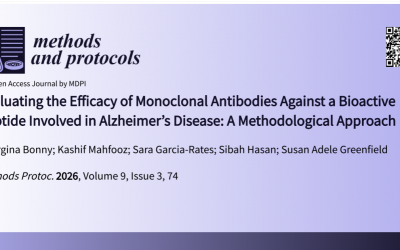
New Publication: Evaluating Monoclonal Antibodies in Alzheimer’s Disease Research
We are pleased to announce the publication of our latest paper, “Evaluating the Efficacy of Monoclonal Antibodies Against a Bioactive Peptide Involved in Alzheimer’s Disease: A Methodological Approach.” The paper outlines a methodological framework for assessing...

Neuro-Bio’s first paper of 2026 has been published!
We’re proud to announce that our first paper of the year has been published! “Therapeutic antagonism of a key toxin driving Alzheimer’s disease: Comparison of a peptide variant and small molecule.” Congratulations to all the authors involved in this important work and...
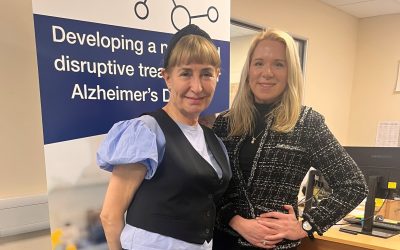
Jo Hayman from Rathbones (UK-based investment and wealth management company) visits Neuro-Bio!
We were delighted to welcome Jo Hayman to visit Neuro-Bio to spend time with Baroness Greenfield and other members of the team. Jo met with our CEO & Founder, Baroness Susan Greenfield, for a series of discussions, including preparations for a panel event...